|
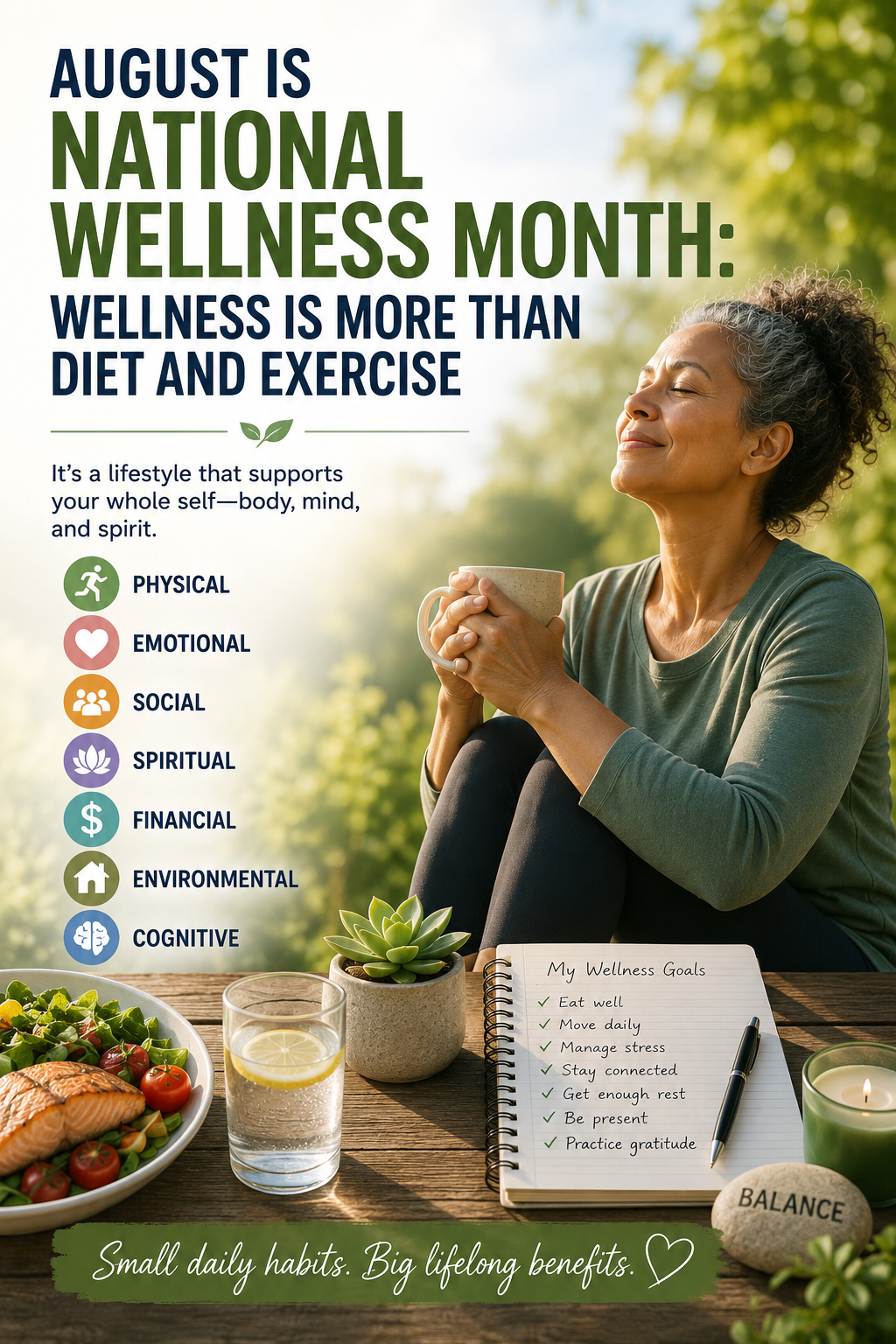
When many people hear the word wellness, they immediately think about eating healthier, exercising more, or losing weight.
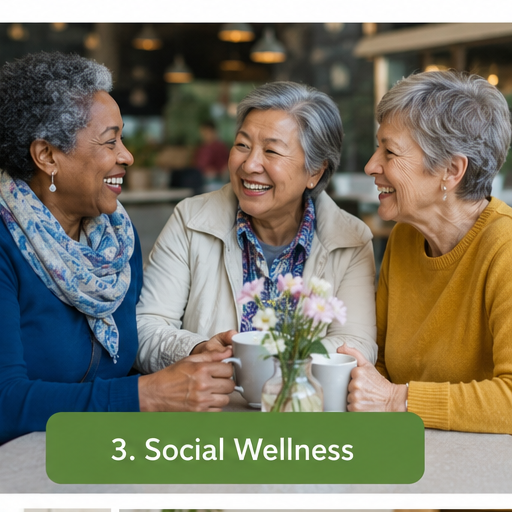
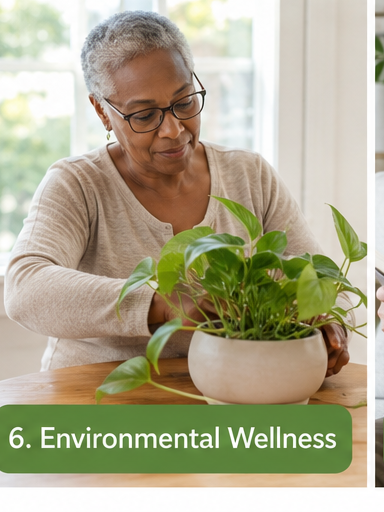
While those are certainly important parts of living well, true wellness is much broader. It involves caring for your whole self—physically, emotionally, socially, spiritually, financially, environmentally, and cognitively.
As we observe National Wellness Month, August offers a wonderful opportunity to pause, reflect, and make small, intentional choices that support a healthier, more balanced life.
Whether you are a family caregiver, an older adult planning for the future, or simply someone striving to improve your overall well-being, remember this:
Wellness is not about perfection—it is about progress!
For family caregivers especially, wellness often becomes an afterthought. Between work responsibilities, family obligations, appointments, medications, and caregiving duties, it’s easy to place your own needs at the bottom of the list.
Yet caring for yourself isn’t selfish—it helps you remain healthier, more resilient, and better equipped to care for others.
The encouraging news is that meaningful change rarely requires dramatic lifestyle changes. Instead, lasting wellness is often built through small, consistent habits practiced over time.
The Seven Dimensions of Wellness:
Take a few moments to think about
these important areas of your life
|