Caring for Both Sides of the Caregiving Relationship
How Balanced Abundant Living and KindredMind can help families build a more supportive caregiving plan
November is National Family Caregivers Month – a time to recognize the people who coordinate appointments, offer reassurance, manage changing needs, and keep showing up for someone they love.
Recognition matters. So does practical support.
When a loved one experiences memory changes or dementia, families may find themselves balancing two equally important needs: the loved one’s need for connection and reassurance, and the caregiver’s need for rest, healthy boundaries, and help.
A thoughtful caregiving plan makes room for both people. That is the connection between Balanced Abundant Living LLC and KindredMind Inc.
Our complementary resources offer families different ways to strengthen their support system.
Two businesses shaped by caregiving experience
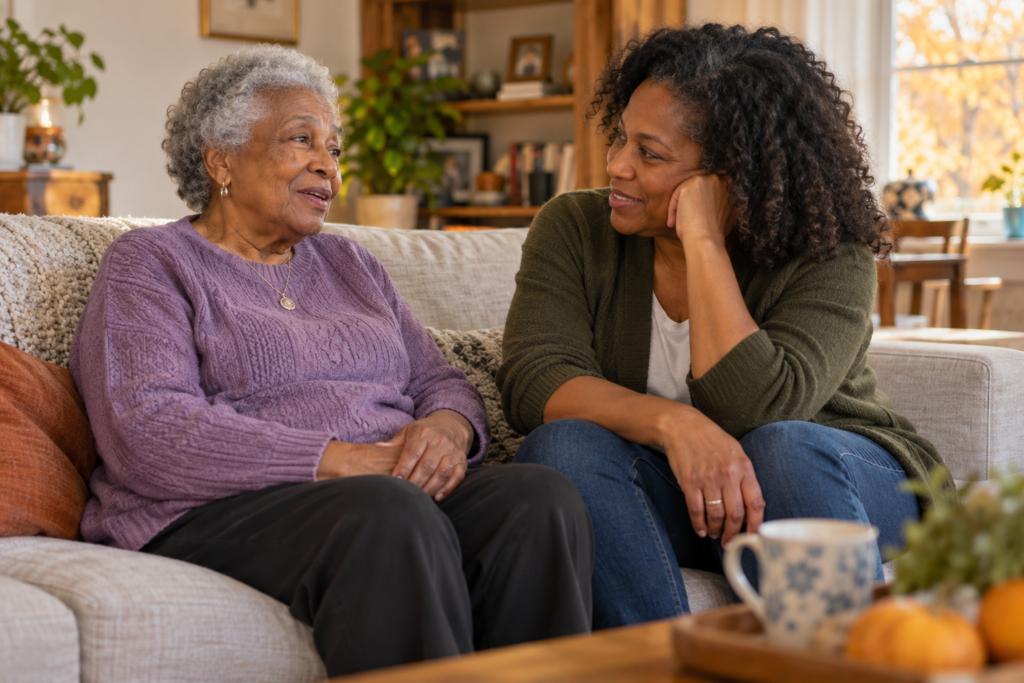
Balanced Abundant Living was founded by Joan M. Jackson, MSLIS, CSA®, a Certified Senior Advisor®, author, former caregiver, educator, and public speaker. Her work draws on personal caregiving experience and a background in information services and nonmedical home care.
Alongside books, self-paced education, and practical tools, Joan provides in-person and virtual presentations for organizations, employers, faith communities, and groups serving family caregivers and older adults. Her topics include healthy boundaries, respite, caregiving responsibilities, and preparing to age in place.
KindredMind’s Co-Founder and President, Kirstin Thomas, also brings personal experience to her work. Her mother’s repeated calls while living with dementia inspired her to develop a service for moments when Kirstin could not answer. That experience helped shape KindredMind’s focus on personalized conversation and companionship.
“At its heart, KindredMind is fiercely committed to preserving human connection, never replacing it. It’s about extending that connection into the moments when you simply can’t be there.”
—Kirstin Thomas, Co-Founder and President, KindredMind
Our approaches meet around a shared concern: how to honor a loved one’s needs while making caregiving more manageable for the person providing support.
KindredMind: how familiar conversation becomes practical support
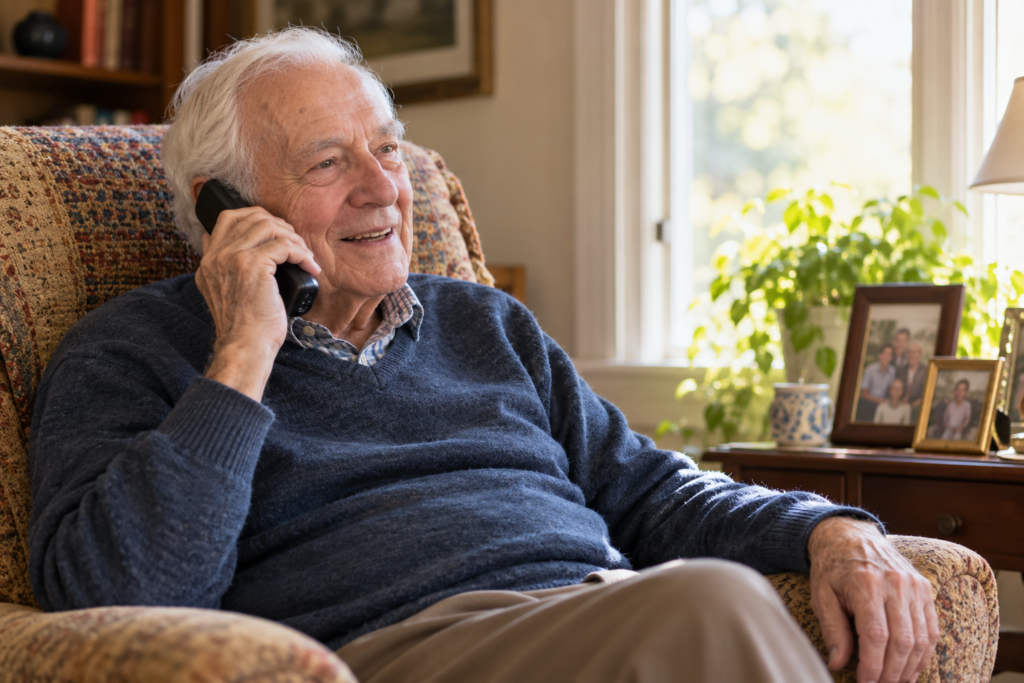
A caregiver may answer a loved one’s question, offer reassurance, and then receive another call asking the same thing. KindredMind addresses these moments through familiar-voice technology, personalized with family-provided context so conversations reflect the familiar nuances, rhythms, and ways of speaking that make connection feel natural.
How families personalize the experience
Caregivers supply details such as routines, family names, recurring questions, favorite subjects, and comforting phrases. They can update this information through a dashboard.
For dementia support, a caregiver can consent to a recreated version of their voice, developed from their own recordings and further personalized through optional training sessions. A friendly, non-caregiver voice is also available.
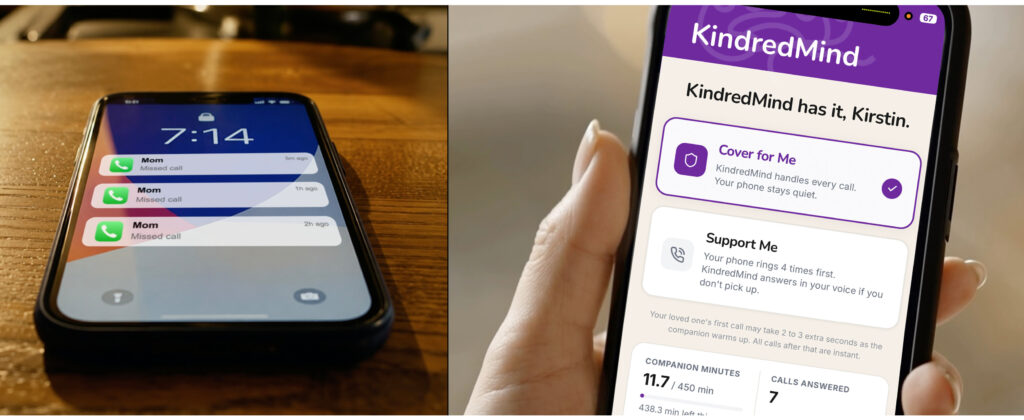
Telephone access uses a dedicated KindredMind number that can be saved in the person’s phone or programmed into a speed-dial button. Families can choose whether supported calls ring the caregiver first or go directly to the companion, helping them plan availability and coverage.
Why the way it responds matters
KindredMind strictly adheres to the dementia communication guidelines established by the Alzheimer Society of Canada. These guidelines emphasize short, clear sentences, one question at a time, a calm and reassuring tone, and allowing time for a response. The companion is designed to avoid finishing sentences, correcting the person, or drawing attention to repeated questions.
Caregivers can personalize the experience by specifying pronunciations, topics to avoid, and familiar, comforting responses. The approach is also grounded in the Validation Model, prioritizing the acknowledgment and validation of emotions, offering comfort and reassurance before gently redirecting conversation toward familiar routines or meaningful memories.
While the intention is to provide personalized comfort and reassurance, individual responses may vary. Caregivers can review conversation summaries and transcripts, receive distress alerts, and access support in fifteen languages. These features help keep caregivers informed and involved but are not intended to replace emergency monitoring or direct supervision.
Different experiences for different needs
KindredMind distinguishes early memory changes from dementia support. Its early-memory experience emphasizes adult conversation, interests, and continuity, using a companion voice rather than a family member’s voice.
Three Ways to Stay Connected
KindredMind offers three ways to support connection and everyday life, adapting as needs change.
Voice brings conversation, companionship, and reassurance to the phone a person already knows how to use, with familiar-voice technology available for dementia support. Presence brings conversation face-to-face on a tablet, offering a friendly face for engagement or, with permission, a familiar face and voice for someone living with dementia. Reminders provides personalized prompts for medication, meals, appointments, activities, and other daily routines. Together, families can choose the support that fits now and adapt it over time.
A reminder does not verify that a task was completed. These services supplement human care, do not diagnose or treat dementia, and do not establish that someone can safely remain alone. KindredMind also distinguishes research involving human conversation partners from evidence about its AI service; it does not claim to improve memory or cognition.
Learn more at https://kindredmind.care/.
A special offer for Balanced Abundant Living readers
Use code BALANCED10 at checkout for 10% off your monthly subscription to KindredMind Voice, Presence, or Reminders for as long as you subscribe to KindredMind.
You can explore KindredMind with a free 14-day trial—no credit card is needed. Before deciding whether to subscribe, you can test the recreation of your own voice and call your dedicated KindredMind number to experience a conversation with the companion.
You can also try a scenario such as “Someone stole my hairbrush!” to hear how the companion responds using dementia-friendly communication, validation, reassurance, and redirection. This gives families an opportunity to explore its approach firsthand and consider whether it fits their loved one’s needs. A trial conversation does not guarantee how every real-life situation will unfold.
Visit https://kindredmind.care/ to explore the trial. If you choose a paid monthly subscription, enter BALANCED10 at checkout to receive the discount.
Balanced Abundant Living: Education for a More Sustainable Caregiving Journey

While KindredMind offers companionship technology, Balanced Abundant Living helps caregivers consider how they will organize responsibilities, communicate needs, and protect their own well-being.
Its resources include:
- Healthy Boundaries for the Family Caregiver and the self-paced course, Boundaries & Balance for the Family Caregiver, for exploring limits and communication needs.
- The Family Caregiver Respite Care Toolkit, for approaching breaks from caregiving with a plan.
- The Connected Caregiver, for families navigating caregiving across distance.
- Abundant Aging in Place, for thinking ahead about support and preparation for later life.
These resources give caregivers opportunities to pause and consider practical questions: What can I realistically manage? Where do I need help? Which conversations should happen before a crisis?
For groups seeking shared learning, Joan’s in-person and virtual presentations offer another way to explore these topics. An employer might arrange a session for employees balancing work and caregiving. A faith community or senior-serving organization might host a presentation on respite, boundaries, or aging-in-place preparation.
Books, digital tools, self-paced learning, and presentations allow people to select an educational format that fits their circumstances.
Explore https://balancedabundantliving.com/.
How these two resources can work together
Imagine an adult daughter who is working while helping care for her mother, who lives with dementia. Her mother sometimes calls repeatedly, seeking reassurance. The daughter wants to respond with patience, but she also needs to attend meetings, sleep, and manage other responsibilities.
A broader support plan might include dependable human care, shared family responsibilities, scheduled contact, and a review of whether KindredMind would suit her mother’s needs.
Alongside that plan, Balanced Abundant Living’s boundary resources could help the daughter prepare a conversation with relatives about her availability. A respite planning tool could help her arrange time away with appropriate care coverage.
KindredMind could supplement that arrangement with personalized conversation during supported calls. Its summaries might also provide topics for the daughter to revisit when she speaks with her mother herself.
For a family coordinating care across distance, The Connected Caregiver could support planning discussions, while KindredMind could be considered as an additional companionship resource between human contacts.
These examples illustrate possible combinations, rather than promised outcomes. Every family’s needs and experience will differ.
The connection is practical: companionship technology can support certain interactions, while caregiver education helps families build the plan around them.
Neither replaces the people, professional services, or hands-on assistance a loved one may need.
Healthy boundaries belong in the support plan
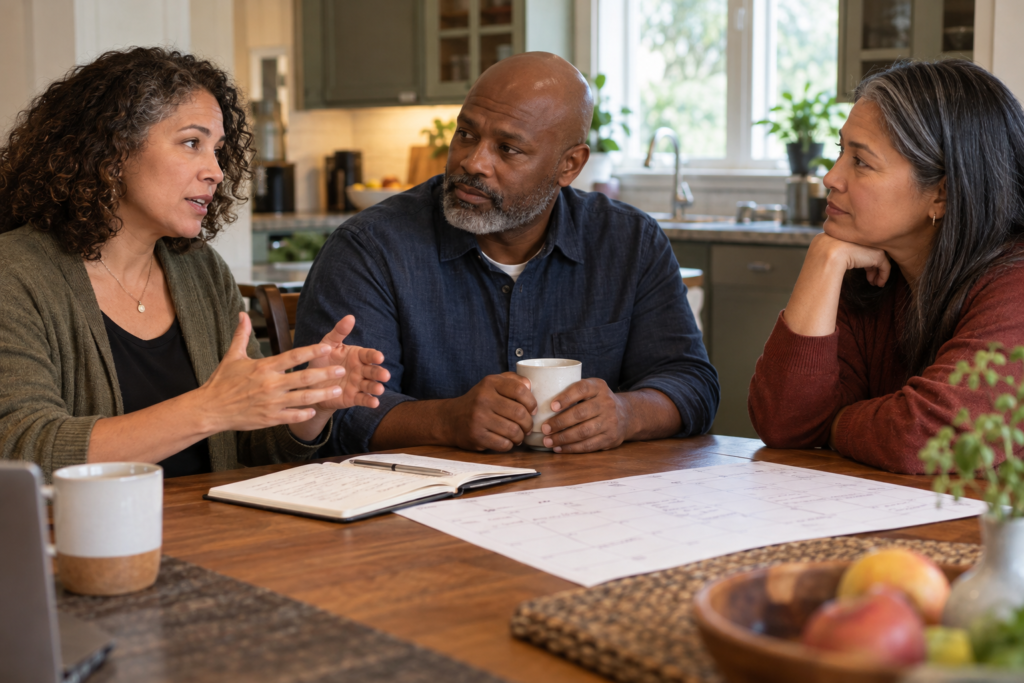
For someone living with dementia, setting a boundary may require more than explaining when a caregiver is available. The person may not remember that explanation. Families may need to arrange reassurance, supervision, and backup support around the caregiver’s limits.
A useful conversation with relatives might begin:
“I want Mom to feel supported, and I also need dependable time for work and rest. Let’s decide who can help, what coverage she needs, and which resources we should explore.”
The goal is to turn a limit into a workable plan—one that considers both the loved one’s needs and the caregiver’s capacity.
One helpful step this November
During National Family Caregivers Month, consider one question:
Where does our current caregiving plan depend too heavily on one person?
Perhaps it is repeated reassurance, transportation, appointment coordination, or the absence of planned breaks. Identifying that pressure point can help you choose your next step.
To explore personalized companionship and reminder services, visit KindredMind: https://kindredmind.care/. Start with a free 14-day trial, with no credit card needed, and use BALANCED10 at checkout for 10% off your monthly subscription to Voice, Presence, or Reminders for as long as you subscribe.
For caregiver books, educational tools, self-paced learning, or inquiries about in-person and virtual presentations, visit Balanced Abundant Living: https://balancedabundantliving.com/. You can also browse the Balanced Abundant Living Information Tools Collection.
Begin with one need, one conversation, and one realistic addition to your support system.
Supporting the caregiver and honoring the loved one belong in the same plan!