anxiety | caregiver care | caregiver resources | caregiver self-care | caregiver stress | Caregiving | Emotionally Abundant Living | family caregiving


There is a quiet truth about caregiving that doesn’t get talked about enough.
Most family caregivers are not struggling because they don’t have enough information.
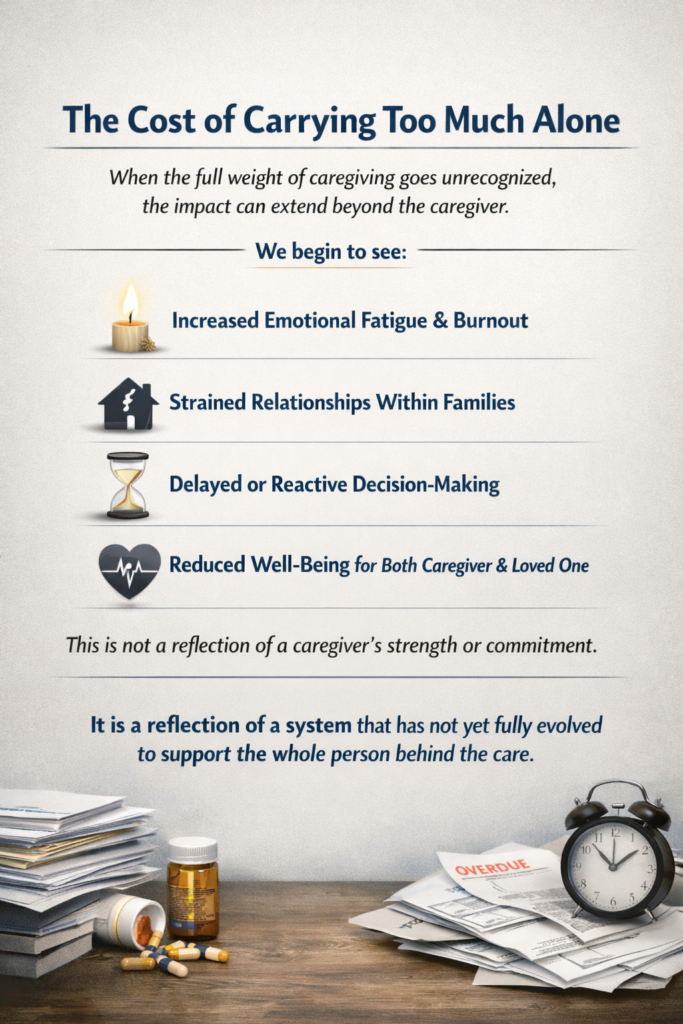
They are struggling because they are carrying too much—emotionally, mentally, and physically—without enough structured support.
And often, they don’t even realize the full weight of what they are holding.

Family caregiving is often described in practical terms:
Managing medications
Attending appointments
Coordinating care
Ensuring safety
These are important responsibilities. But they are only part of the story.
What is less visible—and far more complex—is the emotional and cognitive load that comes with caregiving:
Anticipating needs before they are spoken
Making decisions with incomplete information
Managing family dynamics and expectations
Balancing personal responsibilities with caregiving demands
Carrying ongoing concern about the future
This invisible layer is where many caregivers begin to feel overwhelmed—not because they are unprepared, but because they are unsupported in the right ways.

Most resources focus on:
Disease education
Safety protocols
Medical and logistical guidance
All of these are necessary.
But without equal attention to emotional resilience and practical coping frameworks, caregivers are left to navigate the most difficult parts on their own.
What caregivers often need—but rarely receive—includes:
Clear communication strategies for difficult conversations
Permission to set limits without guilt
Practical tools for managing stress in real time
Guidance on decision-making when there is no perfect answer
Validation that their experience is both real and demanding
When these elements are missing, even the most capable caregivers can begin to feel uncertain, exhausted, and isolated.
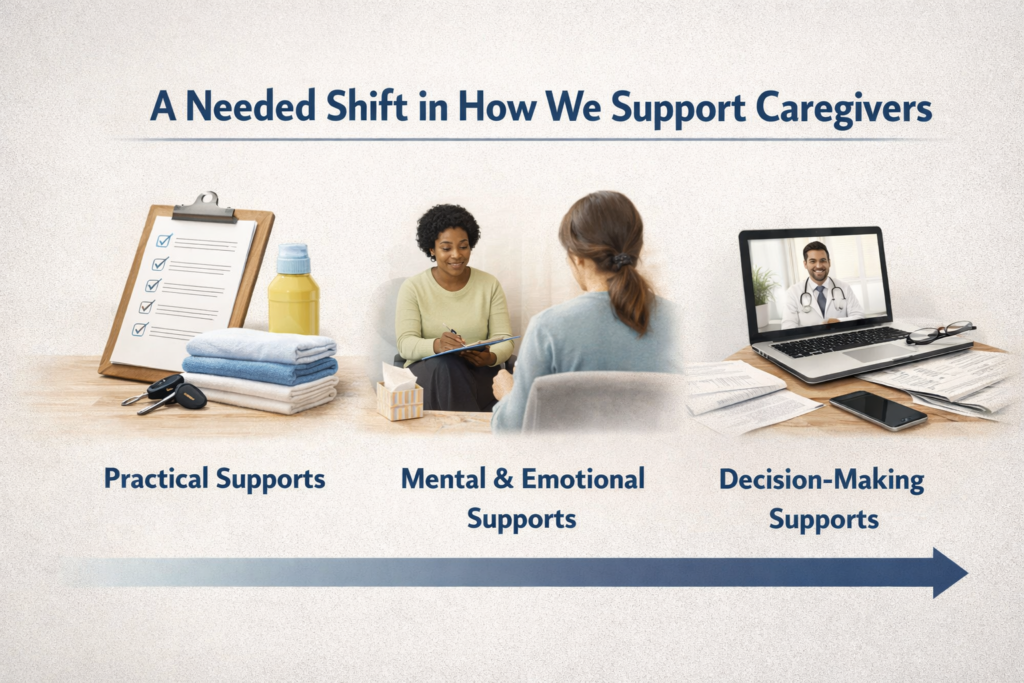
If we, as family caregiver advocates, want to truly support family caregivers, we must expand our approach. Caregiving support must move beyond information—and into integration.
This means creating space for:
Emotional well-being as a foundational priority
Boundary-setting as a necessary skill, not a luxury
Flexible, self-paced learning that fits into real life
Practical, usable tools that can be applied immediately
Ongoing encouragement, not just one-time instruction
Caregivers do not need more pressure to “do everything right.”
They need support that helps them navigate what is already hard—with clarity, confidence, and compassion!
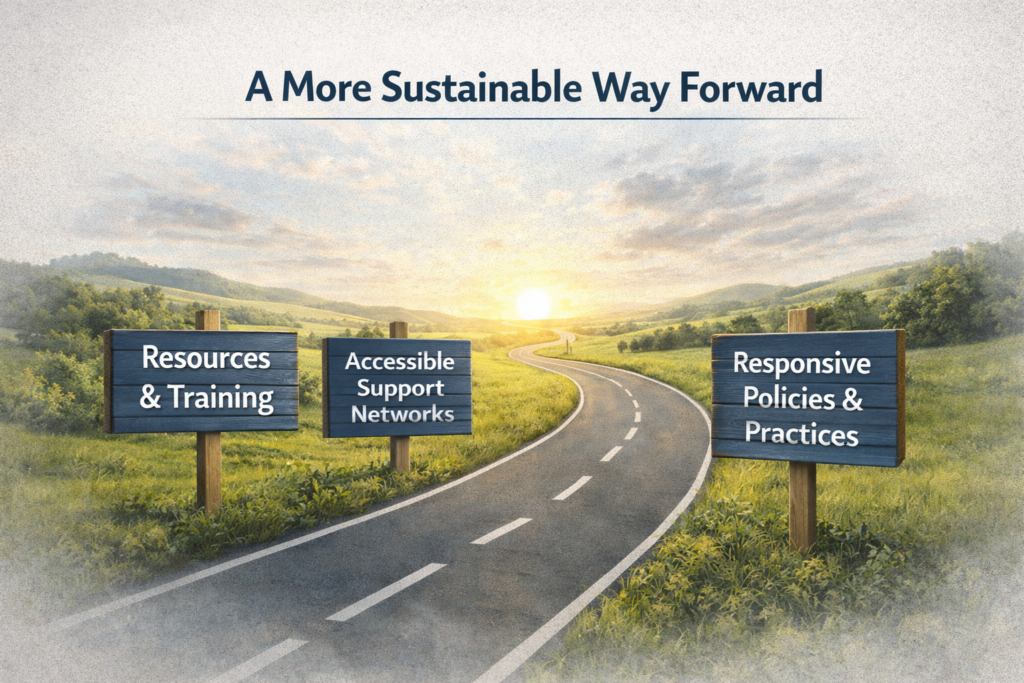
Caregiving is one of the most meaningful roles a person can take on. It is also one of the most demanding.
Recognizing the full weight of caregiving is not about discouraging caregivers.
It is about acknowledging their reality—and responding with better support.
When caregivers are equipped not only with information, but with emotional tools, structured guidance, and practical strategies, something important shifts:
They begin to feel more steady.
More confident.
More capable of continuing—not just in survival mode, but with a greater sense of balance.
If you are a family caregiver, or someone who supports caregivers, this is worth remembering:
Caregiving is not just about what you do. It is about everything you carry while doing it.
And that weight deserves to be seen, understood, and supported!